One of my customers, a first-time chicken dad, glibly remarked, “I think I’ll get into breeding, how hard can it be?” One of my more diplomatic friends responded, “You would be surprised.”
He was thinking that if you buy parents from a reputable breeder, and put them together, the off-spring will all be breeder quality. Wouldn’t that be nice?
The reality is — that just like with humans — off-spring are going to express their own quirky genetic combinations; we all know that family with good-looking parents and the funny-looking kid. Same in chicken land. Lovely SOP (Standard of Perfection) hens and roosters and then a wonky chick shows up, actually lost of wonky chicks show up.
Another customer arrived one day and confidently remarked that the Ameraucana she was picking up must be an Easter Egger as it didn’t have a peacomb. She is correct that SOP Ameraucanas have pea combs. And all the hens and roosters in this pen had pea combs. But not the chick. The chick was indeed an Ameraucana, but a pet quality, not suitable for a breeding pen.
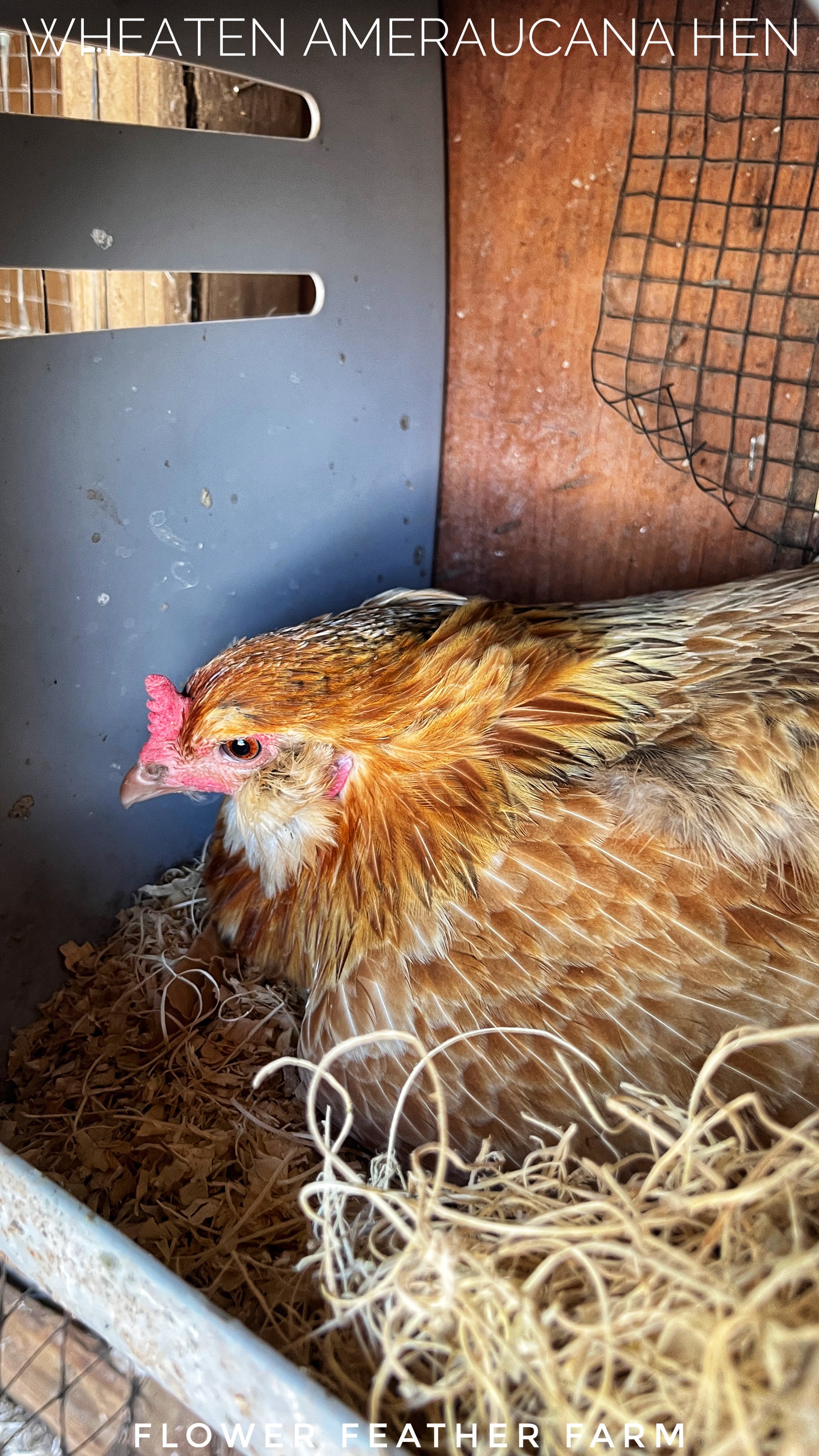
This pic below shows a Blue Wheaten Ameraucana hen hatched from The Gypsy Hen’s hatching eggs, quality lines there. But, does she have a peacomb? Nope. Is she being culled? Yup.
Just last week I had a customer contact me with concerns about chicks she bought elsewhere. They weren’t SOP, so she was concerned that she had been scammed by someone selling impure chicks. Nope. Those chicks could be — and probably were — 100% whatever they were supposed to be, but they were the funny-looking kids of the family. It happens. It happens more than it doesn’t happen, which gets us back to our initial question: “How hard can it be?”
It’s time-consuming and expensive. Hatch 100, keep 10, of those 10, keep 1 permanently. Do this over and over to build a good breeding flock and then keep doing it to replenish and grow your flock. Worry all the time about predation and illness. Hatch all the time, cull all the time.
This week I am going through my pens and marking down the culls. I’ve been growing out chicks all year and eliminating them as we go. Wrong comb? cull. Wrong leg colors? cull. Some characteristics don’t show up until they are much older, so I may feed and nurture a bird for 2 years before I decide he or she is out — usually for wrong body type or nasty disposition at this point. If I can add 2-3 quality birds to each of my breeding pens each year, I’m happy.
Culling does not mean killing. It means removing them from the breeding pens. Sometimes they go to the table egg flock, sometimes they go to the website for you to purchase. If you are buying a laying hen from me, she is a table egger, not a breeding hen. Expect to find some non-SOP characteristics.

You’ve ordered your chicks and set your pick-up appointment. Now what?
Now is a great time to do a little reading so that you are well-equipped to take excellent care of your little ones.
As chick season heats up, I want to talk to you about Chick Flippers. These are people who place large orders from commercial hatcheries, have the chicks shipped in, and then list them for sale at a HUGE mark-up on Craigslist etc. They don’t disclose . . .
Please oh please don't use a feather duster. Yes, they will love it, but when you find the one that got tangled in it and hung herself, you will feel awful.
Well that depends on many things, chiefly the weather and what does your outside set-up entail.
The rule of thumb is that they need to be ten weeks old if the over-night low is going to be around 30.
That said, I put them out at four weeks at about any time of year. What? Yes. Four weeks, with supplemental heat.
One of my customers — a first-time chicken dad — glibly remarked, “I think I’ll get into breeding, how hard can it be?” One of my more diplomatic friends responded, “You would be surprised.”
No, this is not a dating guide. If you are looking for your soulmate, volunteer with an organization that aligns with your values and priorities. All those other volunteers are your pre-filtered field of candidates. Now, back to chicks . . .
Are you just planning on just one round of chicks? Let me save you the trouble of gathering up all the necessary supplies.
Great question. Chick prices vary according to availability, quality, and investment.
I’ve shared quite a few of my best tips and tricks for setting up a chick brooder, but what about the next step? When they are too little to just toss into the big girl coop, but too big stinky to stay in the house.
At this point, I put them in the big girl coop, with accomodations.
I house birds of different ages together regularly. Here is how I introduce them.
Stella Stargazer: before and after Selenium treatment for wry neck.
Medicated Chick Starter and Fermented Feed.
Girl Chick? Boy Chick? How is one to know?
Sexing chicks. Alas, not as easy as we would wish.